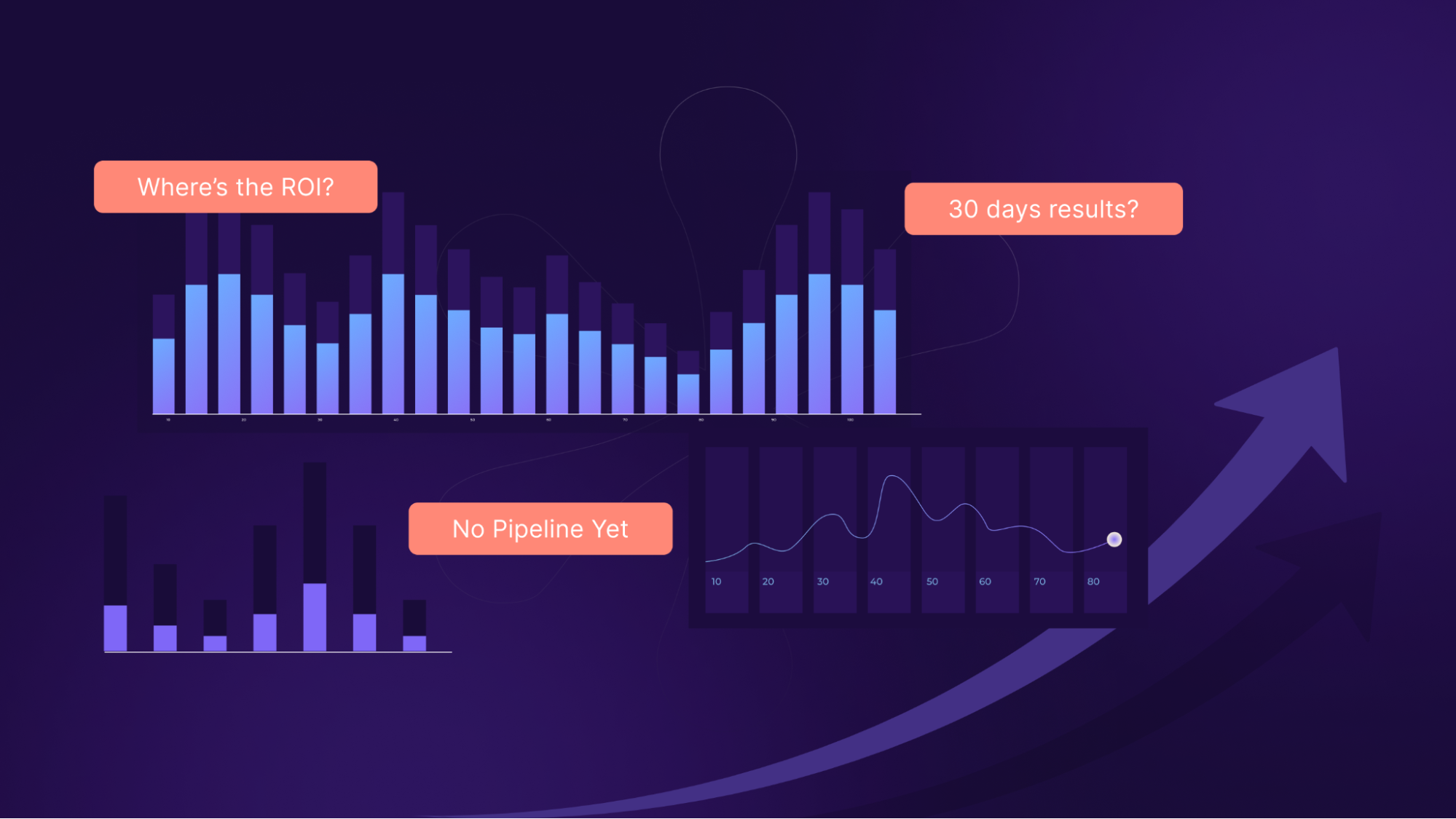
Other teams, like sales, product, and even performance marketing, have a linear feedback loop.
Ship a feature, see usage. Launch an ad, get conversions. Every metric shows up fast and clean — clear signals, tight feedback loops, visible ROI.
Content doesn’t follow that timeline. You can’t publish on Monday and expect a pipeline on Friday. There’s no overnight spike, no instant conversion curve, and no dashboard that tells the full story in 30 days.
That mismatch in expectations is why content is still the first thing cut when budgets tighten.
The irony is obvious every time you scroll through LinkedIn or see a competitor owned by their audience and trusted by their market. Content has always worked, just not on the timescale most leaders want it to.
So, where does this hesitation come from? Why are founders holding onto misconceptions about what content can do for them? And most importantly, what changes are needed to see content as a foundational system that supports your business?
Most SaaS founders don’t doubt the importance of content. They doubt its returns. And that hesitation usually comes from three wrong assumptions: they expect content to work like a product, measure it with the wrong metrics, and treat all formats as if they deliver the same result.
Here’s where the gap begins and how to close it.
Product follows a linear path: build, test, and improve. Content doesn’t. Instead, it compounds over time through visibility, reputation, and repetition.
Some founders expect to “publish” a blog, track conversions, and see a return. But that’s not how awareness works. The blog builds authority; the next few establish trust; and together, they push your brand into the buying conversation.
Judge compound growth by campaign speed, and momentum looks like failure.
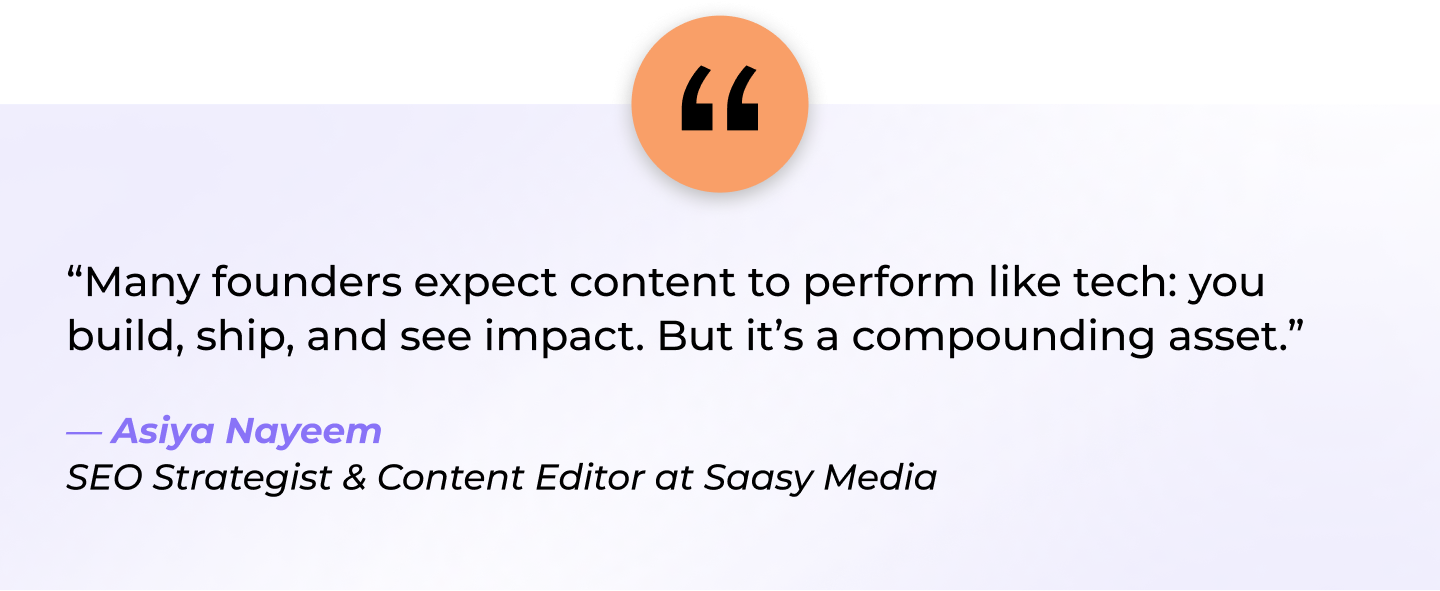
A blog attracts attention, a playbook generates leads, and case studies accelerate proof and close cycles. When you measure them all by one metric (traffic or leads), you flatten your funnel and lose clarity on what’s working.
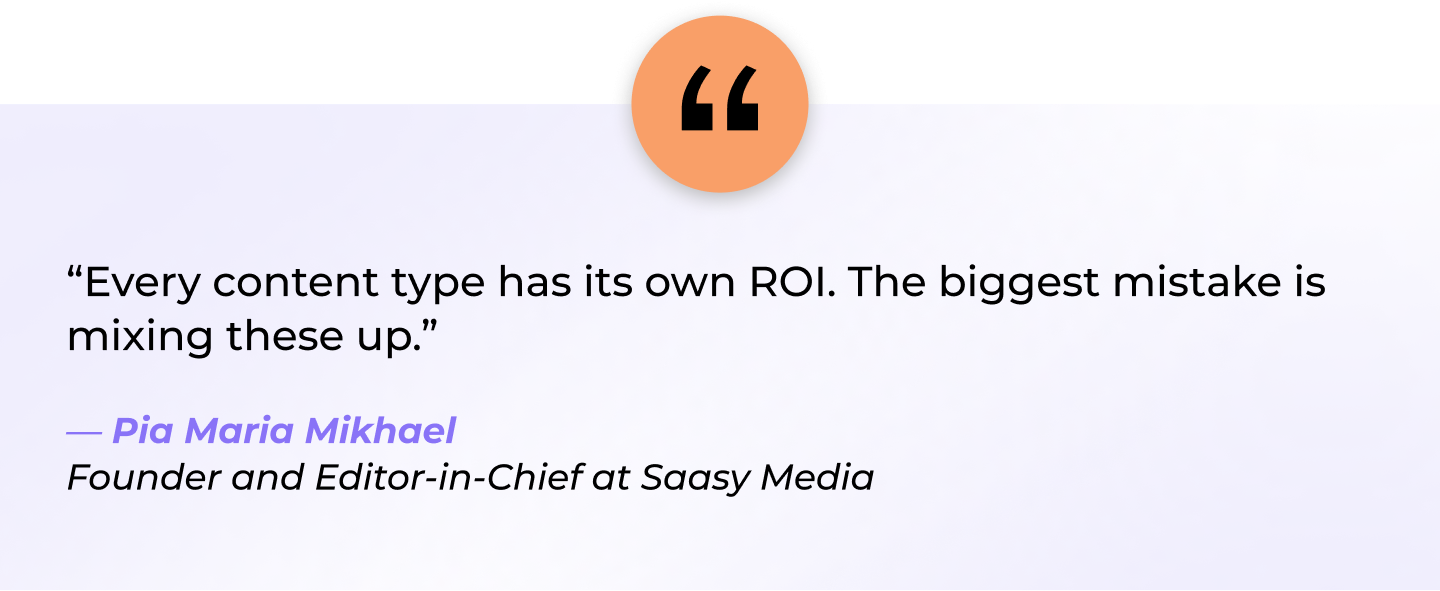
Each asset exists to solve a different problem: blogs shape awareness, playbooks drive action, and case studies give proof to prospects already evaluating you.
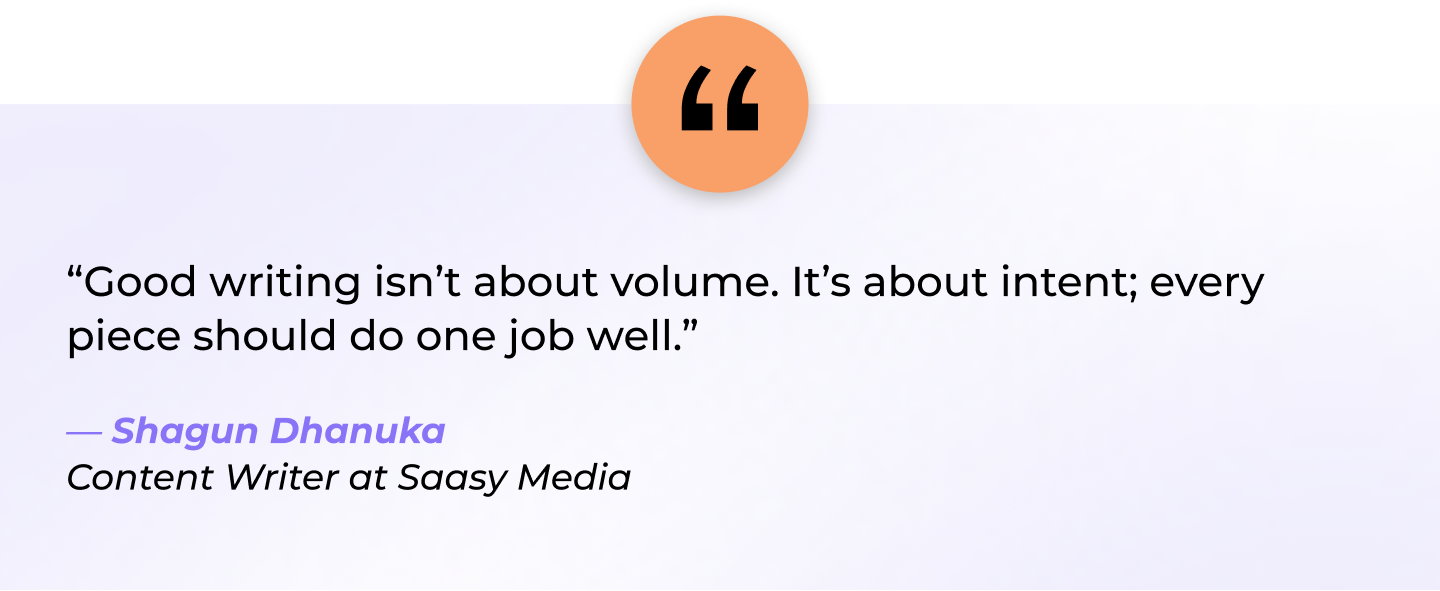
Once you define what each piece is supposed to do, you stop chasing generic ROI and start building a connected, measurable system.
Traffic shows reach, but reach alone doesn’t move the pipeline. The real signals sit deeper in repeat visitors, content-influenced demos, and how often your sales or success teams reuse a piece.
The goal isn’t to grow pageviews. It’s to make content visible where it matters: in deal conversations, nurture sequences, and partner calls.
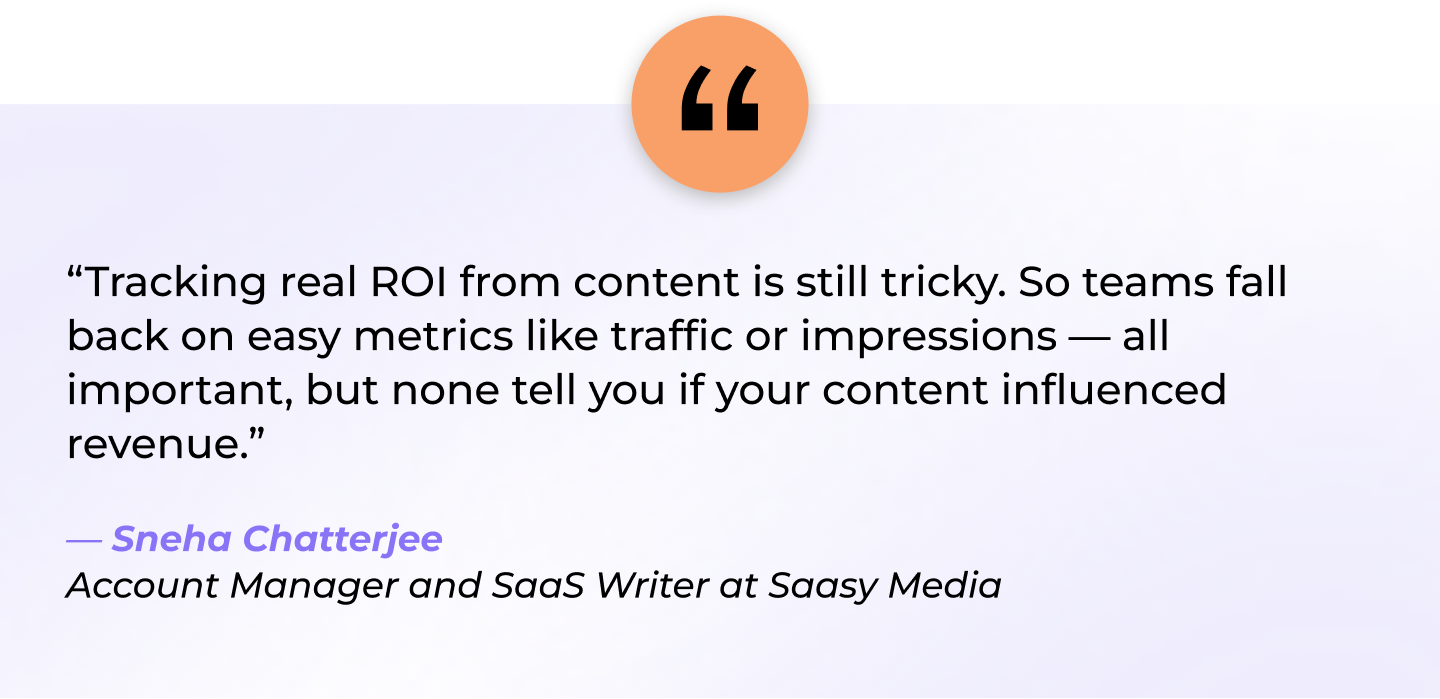
Content hasn’t failed, but your measurement frameworks have. Founders hesitate because they’ve never seen it built with the right structure, expectations, and feedback loops.
They treat it as output instead of a system that connects awareness, credibility, and sales momentum. When each piece has a purpose, timelines are realistic, and influence is measured alongside traffic, the hesitation fades.
The best SaaS teams don’t publish more content. They extract the most value from every piece they produce. They treat content like infrastructure, not output. It supports multiple goals, powers several teams, and drives results long after it goes live.
Most companies approach content like a campaign: publish, promote, move on. But high-performing teams build systems. They plan where each asset will live, who will use it, and how it will evolve once it’s out in the world. That shift, from publishing to system-building, makes their content compound instead of expiring.
Most teams approach content like campaigns: you publish, promote, and move on. High-performing teams build systems. They plan every asset with purpose: where it lives, who uses it, and how it evolves after launch.
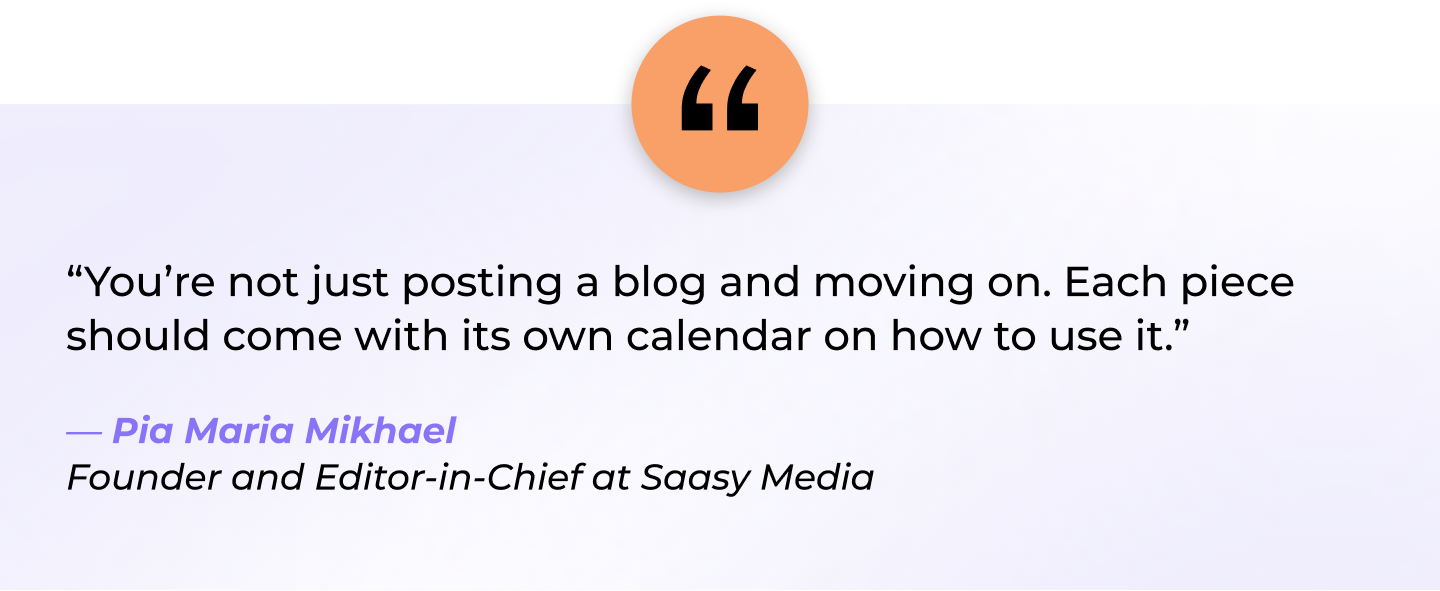
That mindset can turn one blog into ten assets: a LinkedIn post, a sales snippet, a nurture email, a partner reference, and a knowledge base article. The goal isn’t volume. It’s longevity. When you design content with reuse in mind, you create a system that keeps driving value long after publication.
Even the most value-packed content means little if no one uses it.
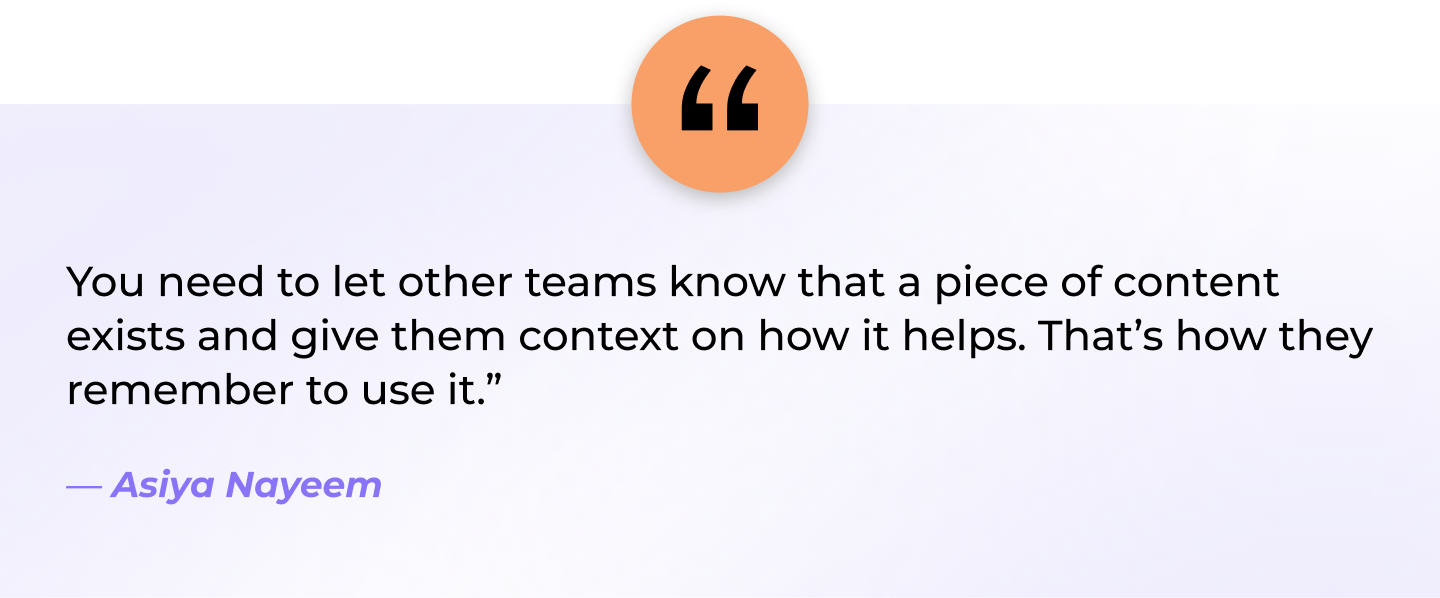
Marketing distributes content externally to attract audiences, but the real value shows up when it’s activated internally. A product explainer becomes part of a demo deck, a case study turns into a sales follow-up, and a guide helps account managers lead strategic renewal calls.
When every team knows how to use content, it stops being “marketing material” and becomes a shared growth tool.
Founders want to see results fast. But the best content systems balance short-term traction with long-term returns.
Create visible wins early (proof-building case studies, co-branded playbooks, or partner guides that bring in immediate leads), while allowing larger initiatives (like SEO) to compound quietly in the background.
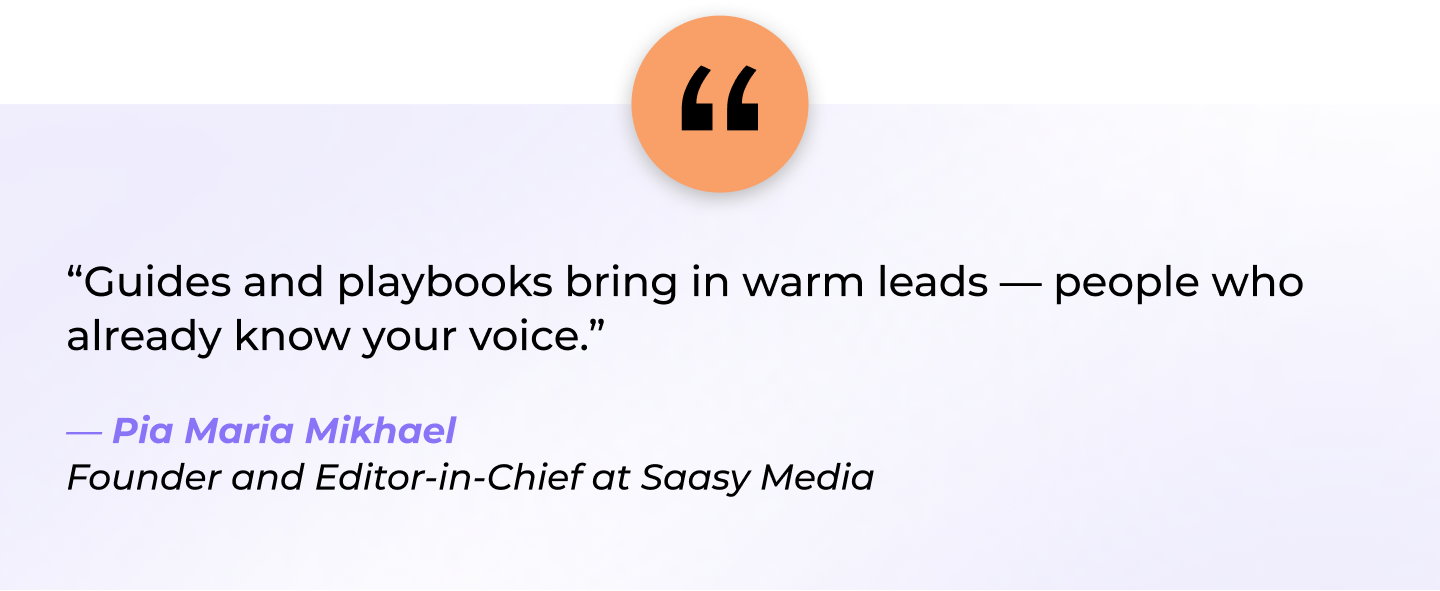
These early signals buy patience. They show leadership that content isn’t abstract; it’s measurable, usable, and repeatable. Shifting from chasing one-off metrics to building recurring proof is what earns content its due.
You don’t convince founders that content works with reports or dashboards. You convince them by showing progress they can see: consistent publishing, visible traction, and stories from the field.
Most leaders don’t lose faith in content; they just stop before it has time to prove itself. The turning point comes when content starts behaving like a system, rather than a series of guesses.
Conviction doesn’t come from volume. It comes from rhythm. When you publish in bursts and go silent for weeks, results flatten, and trust fades. But when you post on schedule (relevant topics, steady cadence, clear focus), you create visible movement.
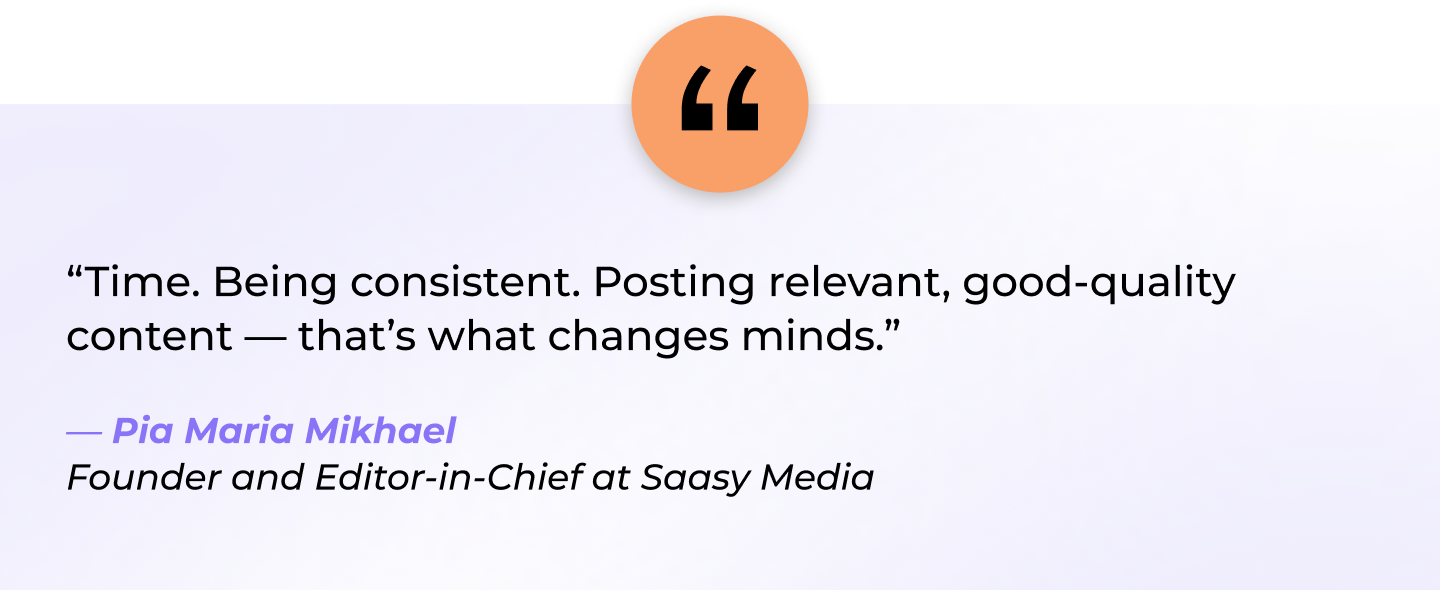
A quarter of steady publishing builds more belief than a year of sporadic effort. Regular output makes content measurable. Leadership can see patterns, link topics to engagement, and recognize that the system works because it runs predictably.
Founders don’t need full ROI to stay committed; they just need early proof that the effort is moving somewhere.
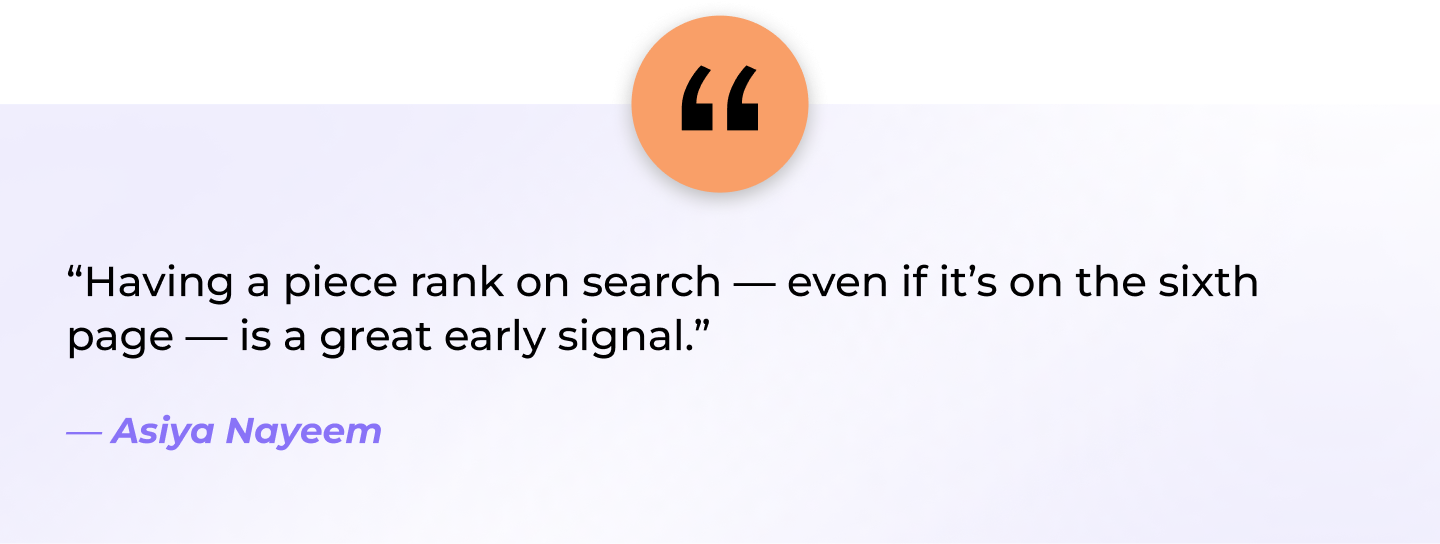
Those small wins (first rankings, positive comments, and mentions in sales calls) are early signs of traction. When you share these signals internally, you turn invisible progress into visible proof. Momentum builds patience, and patience keeps investment alive.
Some of the strongest results never appear in analytics. They show up when other teams use your content: a sales rep shares a case study in a follow-up, or a product explainer helps an account manager close faster.
When you create content that makes other teams’ work easier, value becomes visible fast. Leadership doesn’t just see traffic. They see faster sales cycles, smoother conversations, and deals that move with less friction.
The founders who see content pay off aren’t the ones chasing overnight ROI. They’re the ones who stay long enough to see it compound. Most teams quit when the numbers look flat, unaware that trust takes time to build.
Stay the course. Keep publishing, measuring, and sharing proof across teams. Over time, content starts saving time for the sales team, reducing friction during onboarding, and creating demand you didn’t pay for.
SaaS leaders are finally treating content like an operational function: one that drives visibility, trust, and sales efficiency. But what they choose to value next will decide which brands stay relevant and which fade into the noise.
Here’s what’s changing and what you should build for.
Search is evolving fast, but relevance still wins.
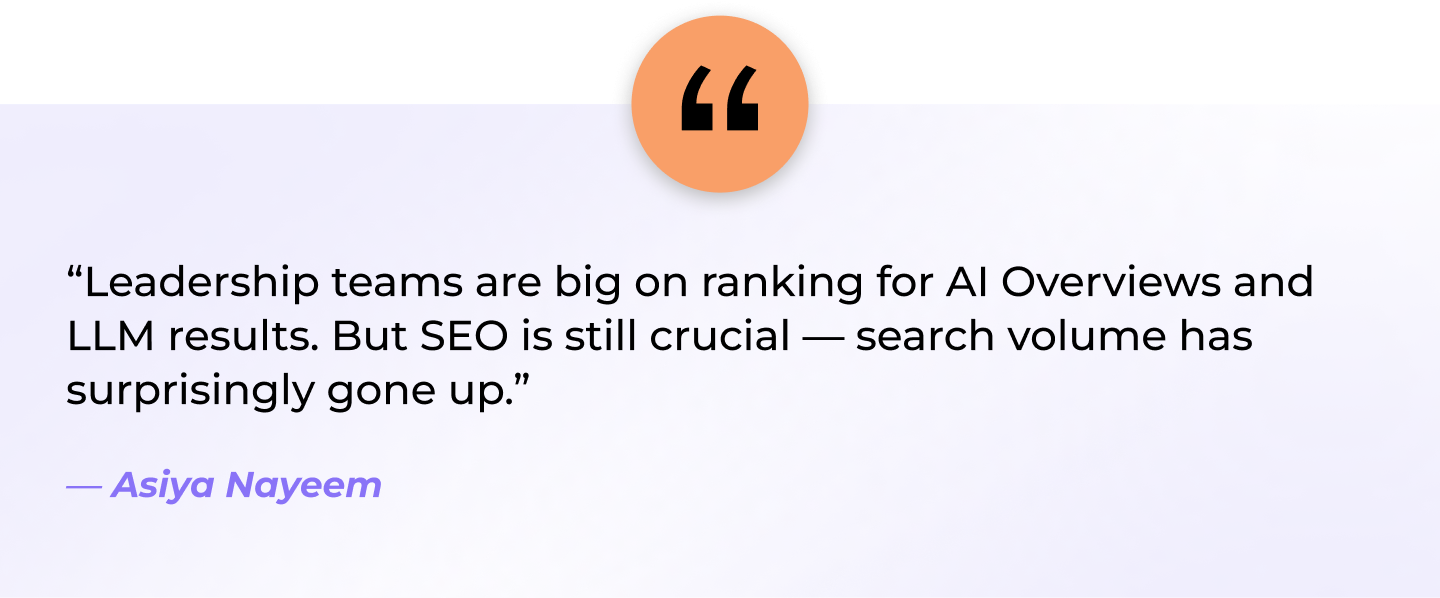
That means the future of content isn’t just AI or SEO. It’s both.
You need to design content that works in multiple environments: clear enough for LLMs to summarise accurately, but rich enough for humans to engage with deeply.
Here’s how you can create content for both LLMs and humans:
This balance lets you win visibility on AI platforms and maintain discoverability in search. The brands that do both will own the new buyer journey from every entry point: chat, search, or recommendation.
Publishing more is a dead strategy. What scales now is authority. Co-branded playbooks, expert-led guides, and deep operator stories outperform keyword blogs because they serve two goals: they educate buyers and strengthen your reputation.
At Saasy Media, we’ve noticed that teams that publish sharp, high-quality assets (designed with experts, partners, or customers) consistently capture warmer leads. They create content that your audience can act on, not just scroll through.
Here’s what you can do to build authority:
Authority content works because it becomes multi-use: marketing publishes it, sales shares it, and customers reference it more. That’s how credibility compounds.
The most valuable content doesn’t always bring traffic. It drives momentum inside your company. A strong case study can close a deal faster than an ad. A clear guide can reduce onboarding calls for support. A practical framework can help an account manager upsell without extra training.
Teams that treat content as enablement see immediate returns. They measure how often sales reps link to their assets, how often AMs reuse them, and how frequently internal teams reference them in Slack or Notion. Those are the metrics that actually reflect business impact.
To make content enablement-ready, design it to be easy to use. Write summaries that can slot into email templates, add visuals that fit into decks, and keep CTAs flexible enough for multiple channels. When content is simple to activate, it stops being a static resource and becomes a tool every team relies on.
Most SaaS founders still see content as just “good to have”. That thinking won’t
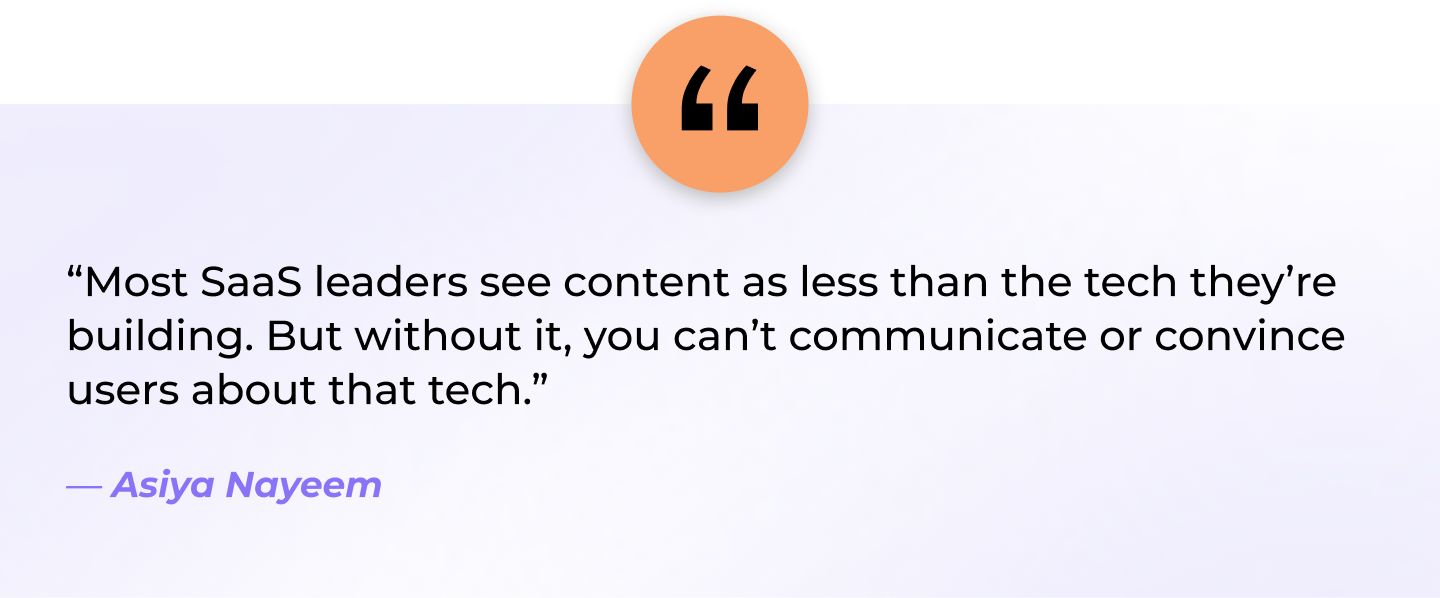
Your product builds capability. Your content builds conviction. Without one, the other can’t scale.
Founders who understand this give content the same patience they give a product. They iterate, analyze, and publish consistently because they know credibility compounds over time. When your messaging stays steady across touchpoints, from search to sales decks, you build brand equity that’s impossible to copy.
This is how teams need to think. They’ll invest in systems that make content measurable, adaptable, and evergreen.
Most teams quit content too early. They expect results before the system has time to work. But every SaaS brand that gets content right has one thing in common—they stayed consistent long enough to turn patterns into proof.
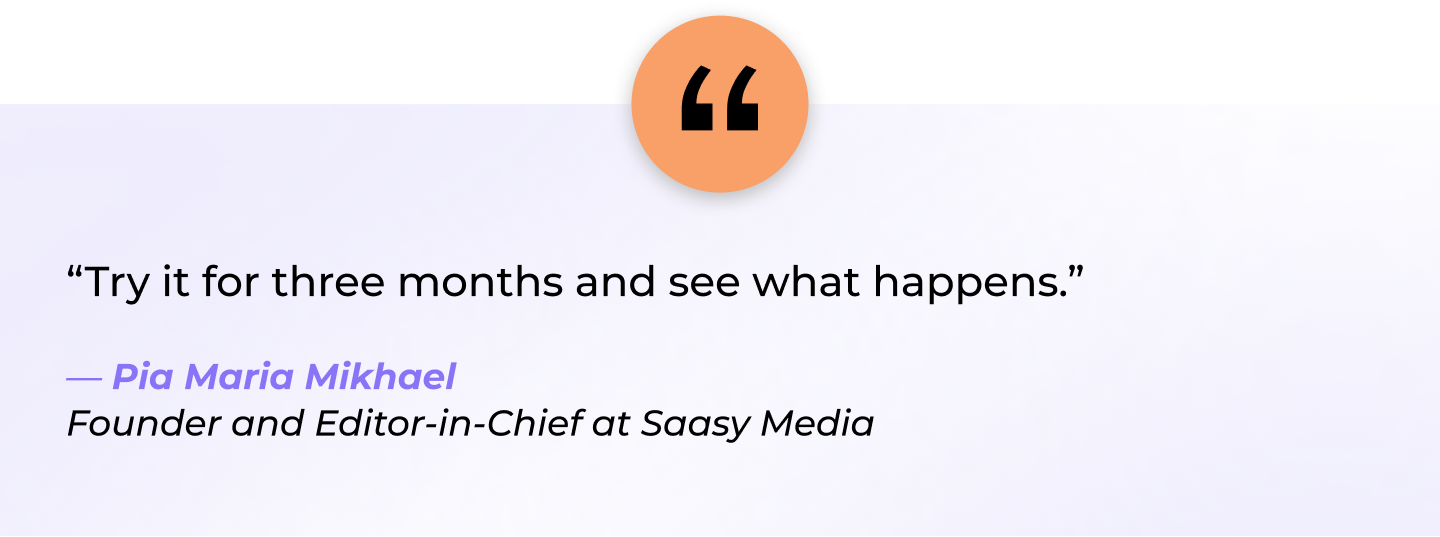
In that time, you’ll start seeing early signals: repeat visitors, warm leads, sales team actually using what you publish. Content only works for teams that build with intent, measure with clarity, and stay long enough to see compounding results.
The founders who commit to the long game stop chasing visibility. They start building trust that scales.
If you’re ready to treat content like a system (not a guessing game), we can help you build one. At Saasy Media, we work with SaaS teams to design content engines that are measurable, reusable, and built to influence revenue.
Book a strategy call with Saasy Media.