For a long time, ebooks were the default move to generate leads. They were easy to produce, easy to gate, and easy to measure. A few design tweaks, a landing page, and you had yourself a “lead magnet.” It worked until everyone started doing the same thing.
Soon, every ebook started to sound the same: familiar ideas, surface-level takeaways, and no real substance. Brands began to notice the disconnect. People were downloading, but they weren’t finding the content useful, and those downloads rarely turned into genuine product interest.
At Saasy Media, we’ve seen a clear shift. Readers are responding better to playbooks—content that’s still packaged as an ebook, but far more focused on implementation. Playbooks don’t just explain a concept. They show you how to execute it, step by step.
In this guide, we’ll break down what’s wrong with the traditional ebook, why playbooks perform better, and how to use them to drive real growth.
The issue has been about how teams structure their ebooks.
After a point, they all started to sound the same:
“The Ultimate Guide to [insert generic concept]”
“The Complete Playbook”
“The Definitive Framework”
The problem is in perspective. Most ebooks focus on what is happening in the industry instead of showing readers what to do about it. They gave context but not clarity.
“People don’t need more explanations. They already know what’s happening. What they want is the how—what to do with that information and how to see real impact.”
- Asiya Nayeem, SEO Strategist and Content Editor at Saasy Media
That’s where the disconnect began. Readers no longer want to collect ideas; they want to apply them. A piece that doesn’t help them act doesn’t earn a second read.
Which one of these do you think will get higher downloads and reads:
“Brands don’t like fluff. They want to actually implement what’s being taught to them. If your ebook doesn’t make that possible, it’s forgotten within minutes.”
- Pia Maria Mikhael, Founder & Editor-in-Chief at Saasy Media
That’s why download numbers became a false signal of success. The traditional ebook still looks good on paper, but in reality, it rarely moves a lead closer to action.
Playbooks work because they bridge intent and implementation.
When you publish one, you’re not giving readers more theory. You’re showing them the steps they can take next. Every section has a function: explain the goal, outline the action, and show the expected outcome. That structure makes the content practical, not promotional.
“A playbook is tactical; it offers step-by-step instructions and how-to frameworks.”
- Asiya Nayeem
A playbook doesn’t summarise industry knowledge. Instead, it documents what actually works. You’re giving readers tested systems, not opinions.
That clarity changes how people engage with it. When a reader downloads a playbook, they’re not skimming through. They’re looking for solutions to a defined problem. They’re invested because they plan to use what they’re reading.
“When someone downloads a playbook, they expect to apply what’s inside it. That expectation is what makes the content valuable.”
- Pia Maria Mikhael
A strong playbook explains a process and teaches someone how to implement the idea. Every part should move the reader from understanding to execution, without needing another resource.
Here’s how to make that happen:
Your reader should leave with a clear plan they can apply right away. Use real examples, screenshots, or data points to show how each step works in context. Avoid abstract frameworks. Spell out the how, not just the what.
“Include real-world examples, visuals, and steps that show readers how to act.”
- Asiya Nayeem
A playbook that only describes a concept becomes another PDF. A playbook that helps execute becomes a reference.
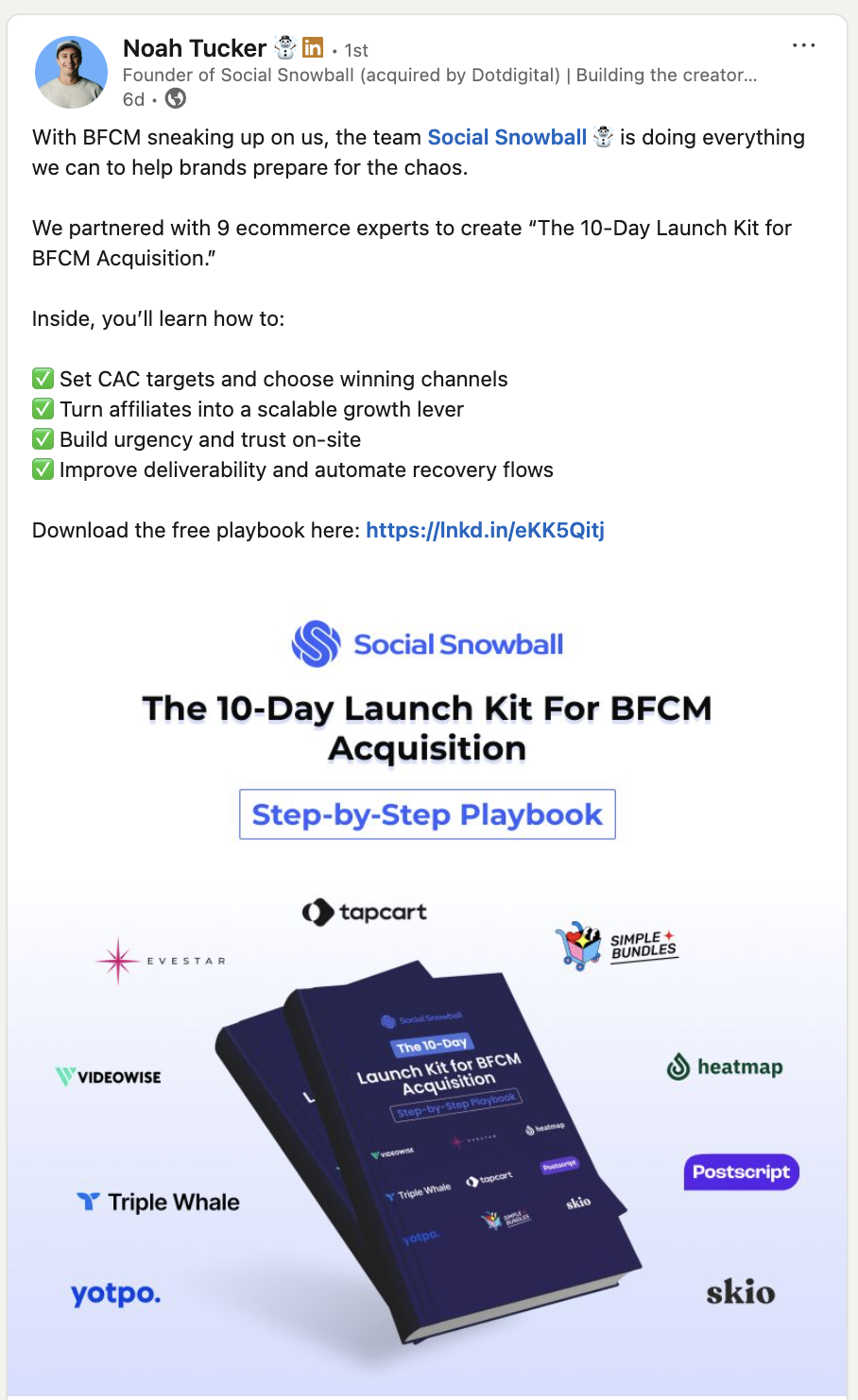
Readers trust practitioners who have done the work, not teams summarising it. Capture insights from the people who build, test, and refine your strategies every day: account managers, partners, customer success teams, and even power users.
“Capture insights from people actually doing the work — the ones testing, failing, and refining strategies in real conditions.”
- Asiya Nayeem
A good playbook is made to be shared and repurposed. From the start, think about how each section can stand alone: as a blog, a carousel, a newsletter tip, or an internal resource. This makes your content easy to repurpose without losing its value or message.
“Repurposing isn’t an afterthought. It’s part of the playbook’s success. You should be able to extract pieces that work across social, email, and internal enablement.”
- Pia Maria Mikhael
When you build for reuse, your playbook continues to deliver value without needing another launch.
Playbooks perform best when they involve more than one voice. Invite partners, experts, or customers to contribute sections on topics they have practical knowledge of. Their perspective adds credibility, and their networks multiply reach once it’s published.
“Have partners contribute sections. When they have skin in the game, they also distribute it.”
- Pia Maria Mikhael
When you combine all four (tactical direction, credible sources, reusable structure, and shared ownership), you create a resource that stays relevant long after launch.
It becomes a resource that builds authority every time it’s shared, referenced, or applied.
You can spend weeks gathering insights, refining examples, and designing every page, but without a distribution plan, your playbook’s impact ends the day it goes live.
If you want your playbook to perform, you need a system that gets it in front of the right people, at the right time, through the right channels. That starts with small, deliberate actions:
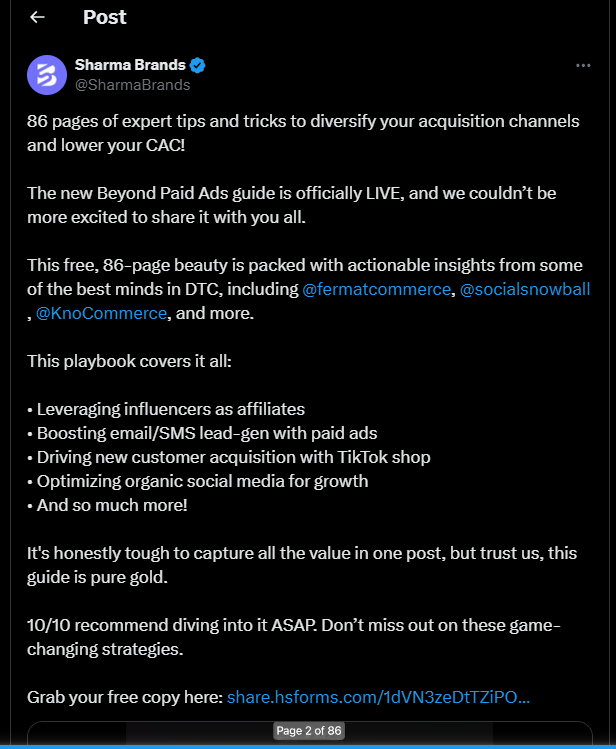
“When your playbook is out in its first week, focus on shares and mentions. Don’t be afraid to post hot takes.”
- Asiya Nayeem
Those early interactions build momentum. Every mention or repost introduces your playbook to new audiences, builds credibility for contributors, and keeps your brand top of mind.
If you need a repeatable framework for this, download our detailed playbook distribution guide to set up your next launch.
If you still measure playbook success by download count, you’re missing the point.
Downloads tell you reach, not results. They show how many people were curious and not how many took action. The real question isn’t ‘how many opened the file’, but ‘what happened after they did.’
Previously, ebook metrics focused on volume, and that’s where most teams go wrong. They celebrate surface metrics: number of downloads, open rates, and traffic spikes. These numbers look good on a dashboard but say nothing about intent.
A playbook that drives five qualified deals is far more valuable than one that racks up 1,000 passive reads.
“Pipeline generated = number of downloads × average lead size. And of course, deals booked is the best metric.”
- Pia Maria Mikhael
This metric shifts the focus from how many people saw it to how many acted on it. When you connect your playbook’s performance directly to revenue, content stops being a marketing asset and starts being a growth driver.
Here’s how to think about it:
Each stage tells you whether your playbook is just being seen or actually driving decisions.
For years, SaaS brands used ebooks as a badge of authority— a way to say, “we know this space.” But that doesn’t work anymore. Authority today isn’t about how much you say. It’s about how clearly you prove it.
Playbooks do what traditional ebooks couldn’t: they show the process, the context, and the results that make those insights real. A resource that helps someone act gets shared, cited, and remembered.
At Saasy Media, this is the principle behind everything we publish. We create content that is structured clearly, written with intent, and tested against results. The outcome is simple: content that people don’t just download but also use.
If you want your content to work that way, build it like a playbook: tactical, grounded, and designed for action. If you want help creating one, book a call with our team at Saasy Media.
[a]it would be cool to create a blog itself for repurposing our core pieces into different things. just a thought