How to Build Outcome-Driven Briefs That Make For Valuable Drafts
Table of Contents
A brief decides how well a draft will turn out, long before the writer opens the document. When the brief is weak, the draft has no chance.
Most broken briefs fall into only two patterns:
Vague briefs, where the writer doesn’t know what the piece is meant to achieve.
Unfiltered briefs, where the writer gets information with no direction.
Both lead to the same outcome: a draft that looks busy but says nothing meaningful.
The real issue comes from the brief. It explains the topic, not the outcome. So the writer knows what to cover, but not what the piece must do.
Outcome-driven briefs fix that. They give the writer a clear purpose, a defined angle, and the context to make informed decisions, so the draft reads like it came from someone who understands the topic practically, even if they aren’t the expert.
This guide shows you exactly how to build better briefs, avoid mistakes that make your briefs hard to write, and how to avoid patterns that slow content down.
TL;DR
Start every brief with the outcome. Define what business goal the content should support and what action or decision you want the reader to take before assigning the topic.
Give writers context, not just instructions. Include audience pain points, industry nuances, common objections, and the angle so they can make informed writing decisions without guessing.
Build the structure around real buyer questions. Use the questions your ICP is actively asking to shape headings, flow, and depth instead of relying on keywords alone.
Filter research before you share it. Curate only the data, examples, and resources that strengthen your argument instead of overwhelming writers with links and background material.
Treat your brief as the blueprint for the draft. Lock the search intent, angle, narrative, constraints, CTA, and success criteria upfront so the first draft is strategic, focused, and easier to approve.
Why most briefs fail
Most briefs fail because they don’t give the writer enough clarity to produce a meaningful draft. When the brief doesn’t carry the insight or direction the writer needs, the final piece will always sound generic, even if the writer is talented.
Here’s where things break down:
You focus on the topic instead of the angle: A topic tells the writer what to cover. An angle tells them how to think about it. Without the angle, the draft has no point of view, no tension, and no structure.
You give instructions instead of context: Writers don’t need a task list. They need to understand the situation: why this piece matters, what conversation it enters, and what decisions it should influence.
You don’t clarify the real purpose of the piece: Every asset has a job—educate, compare, remove doubt, accelerate a deal, support SEO. If you don’t state the job clearly, the writer will guess, and the draft will wander.
You don’t define the outcome the reader must reach: A good brief explains the shift you want the reader to make. What should they understand, decide, or do after reading? If that isn’t clear, the writer can’t build towards it.
You assume the writer already understands the industry: Writers don't always have your internal knowledge. They don’t know the common objections, failed attempts, mental models, or internal politics buyers deal with. If the brief doesn’t bridge that gap, the content will always sound surface-level.
You share research without filtering it: Unsorted research forces the writer to guess what matters. You want the writer to build an argument, not sort through 20 tabs in search of the right direction.
The Saasy definition of an expert-driven brief
An expert-driven brief is simple. It helps the writer think at the right level from the start. It removes the guesswork, specifies the outcome, and shows the writer exactly how the piece needs to work, not just what it needs to cover.
At Saasy, here are the core principles we follow when creating a brief:
1. It starts with the outcome, not the topic.
A topic tells the writer what to write about. An outcome tells them why the piece needs to exist and what shift the reader must make.
When you define the outcome first, the writer knows:
The purpose of the asset
The action it should influence
Where it fits in the funnel
What decisions does it need to support
2. It gives the writer the context that an expert would rely on.
You don’t expect the writer to magically know:
The nuance in the market
The misconceptions buyers carry
The friction points in the journey
The patterns you see internally
The brief gives them this context in plain language, so they start from a higher baseline and avoid shallow takes.
3. It defines constraints early so the draft stays sharp.
Writers need creative freedom, but they also need boundaries. A well-thought-out brief tells them:
What angles don’t work
What language or framing dilutes the message
What must be avoided to protect accuracy
Which examples make sense for your ICP
Where can they take creative liberty
4. It filters information instead of dumping it.
A good brief doesn’t overwhelm the writer. Instead, it curates information so only the useful pieces make it in. A few key elements we include are:
Relevant data
Validated insights
Specific examples
The real questions your ICP asks
By adding this, you remove:
Generic research
Outdated claims
Unrelated “nice to know” points
Anything that doesn’t strengthen the outcome
What an expert-driven brief is not
To be clear:
It’s not a list of instructions.
It’s not a collection of links.
It’s not a keyword dump.
It’s not a task list for hitting word count.
An expert-driven brief creates alignment on purpose, angle, audience, and outcome so the writer can deliver a draft that feels considered, correct, and genuinely valuable.
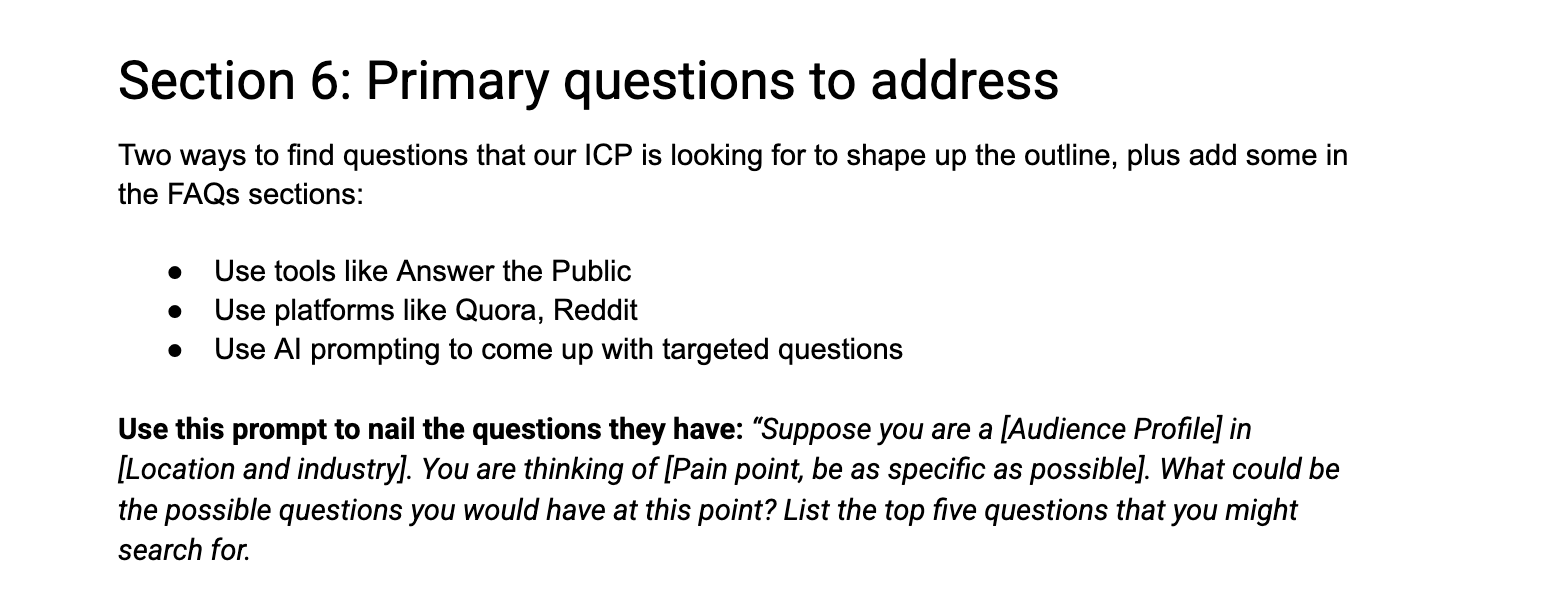
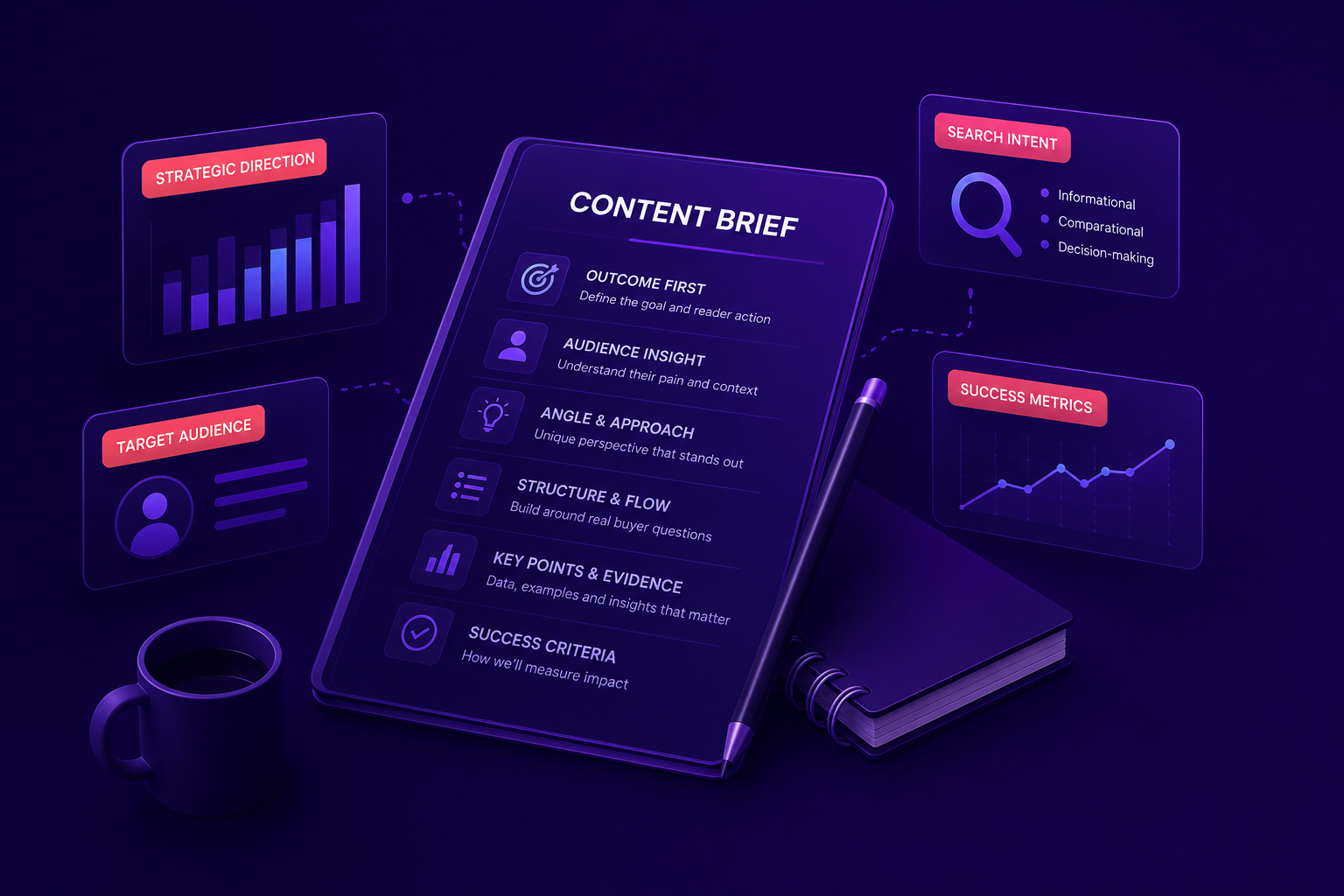
Elements of our Saasy brief template (and why each part exists)
A strong brief isn’t about adding more information. Instead, it’s about giving the writer the right information; the kind that shapes decisions, sharpens angles, and keeps the draft tied to the outcome.
Here’s how each part of our brief does that.
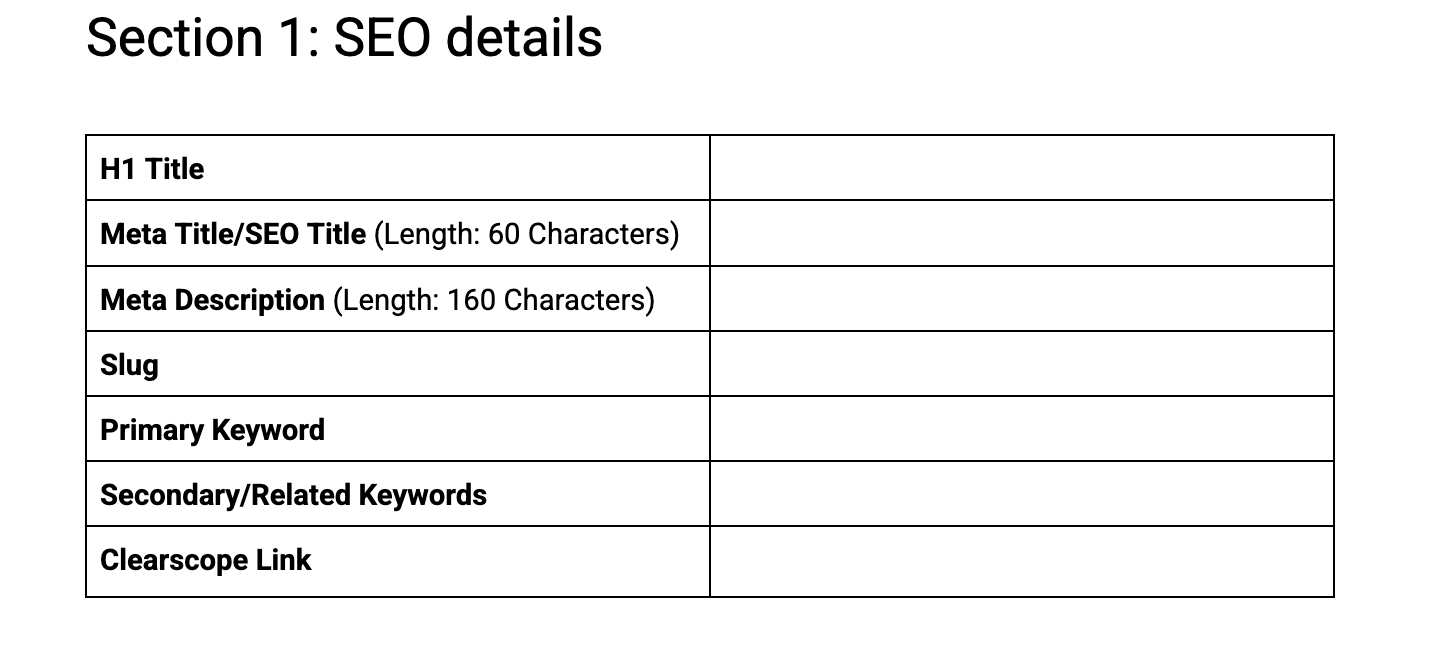
Search intent and SEO details
You start with search intent because it decides the purpose of the draft. It tells you:
What the reader expects to learn
How much detail they need
Whether the piece should teach, compare, or guide a decision
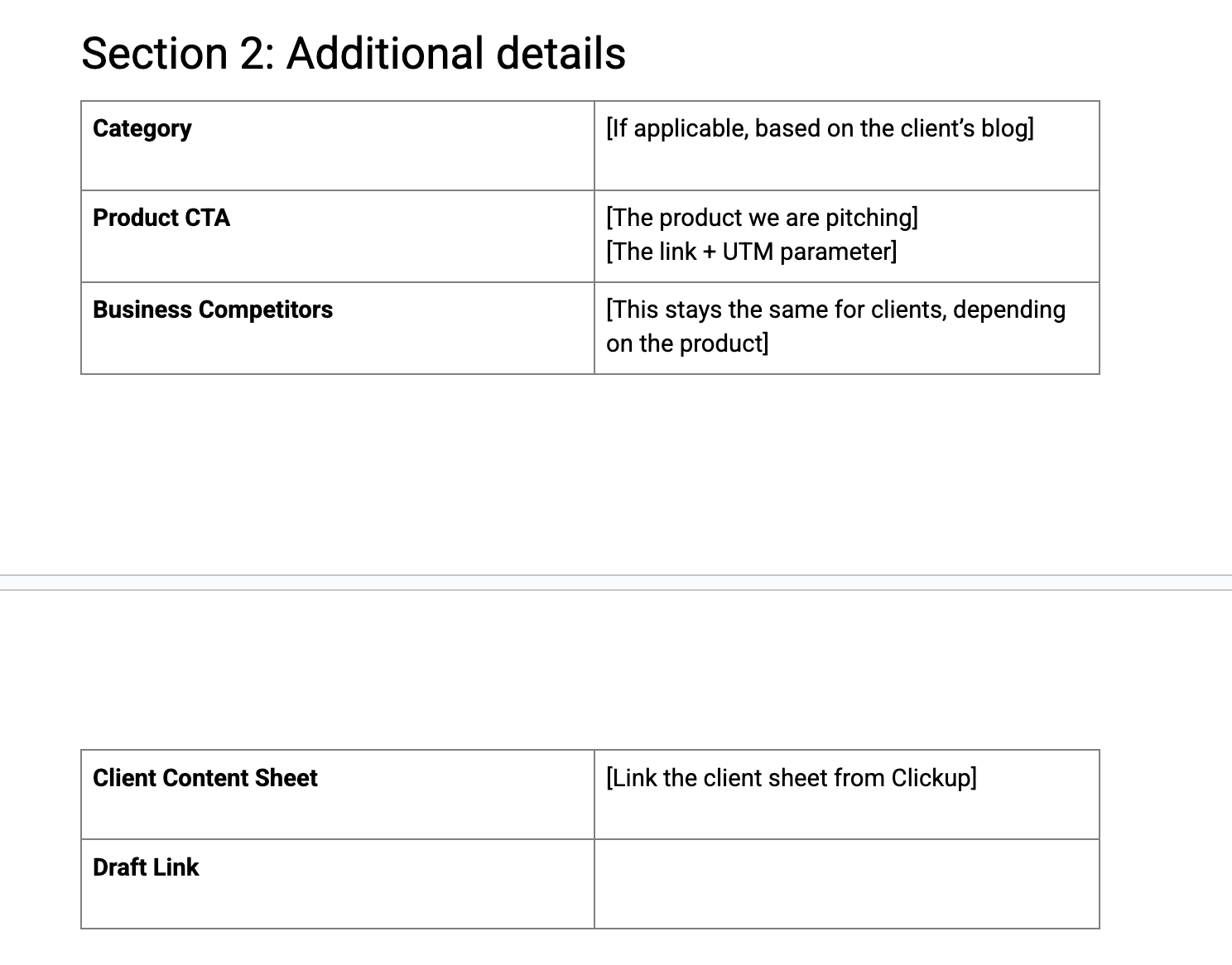
Additional details (category, CTA, competitors)
This section sets the commercial frame. It tells the writer:
Where the piece sits in your content system
What you want the reader to do after reading
Which competitors shape your reader’s understanding
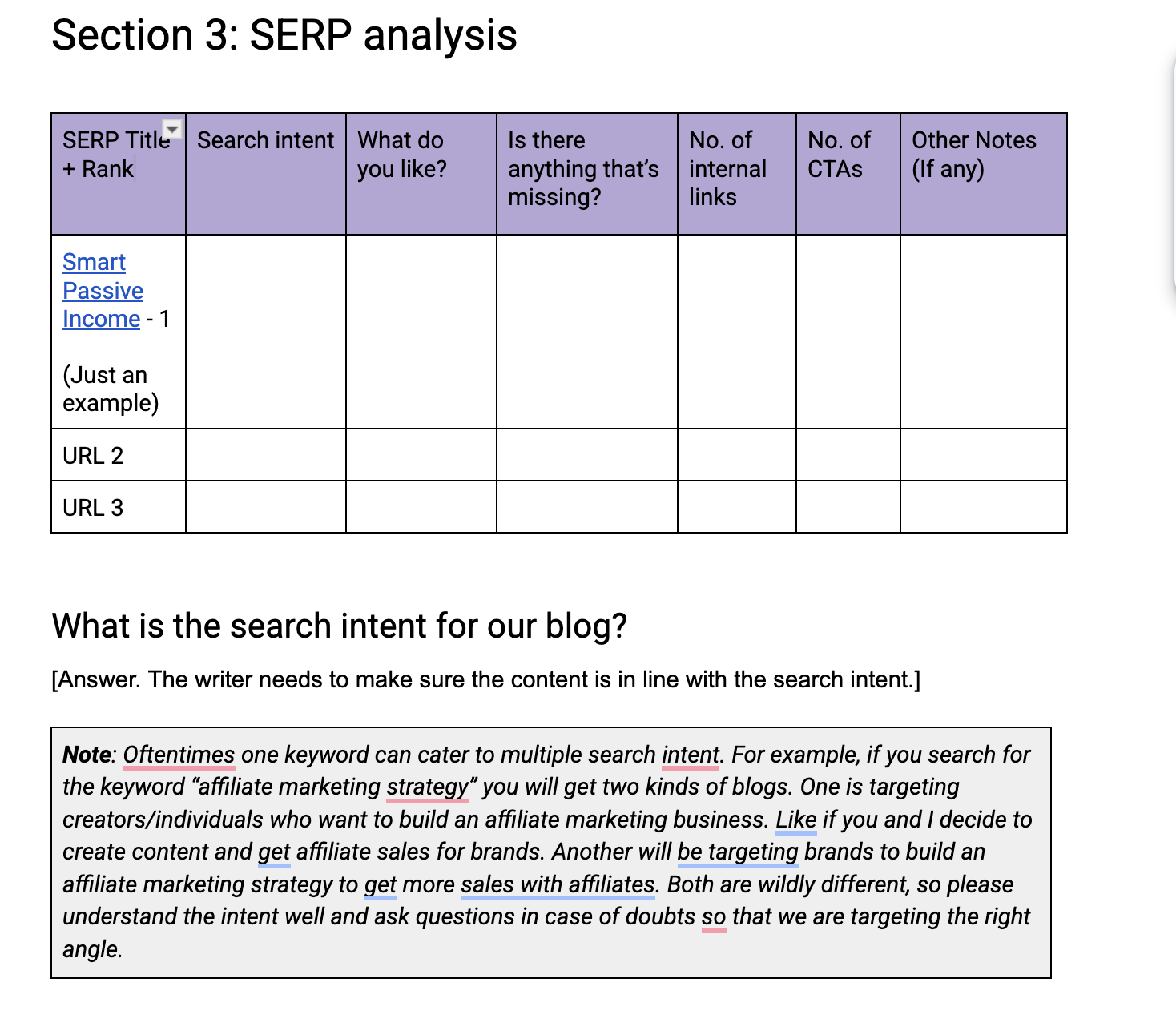
SERP analysis
You add SERP insights to show the writer the current standard and the gap you want to fill. This helps the writer understand:
What’s already ranking and why
What those pieces miss
What angle will actually stand out
What mistakes to avoid because they mislead or oversimplify
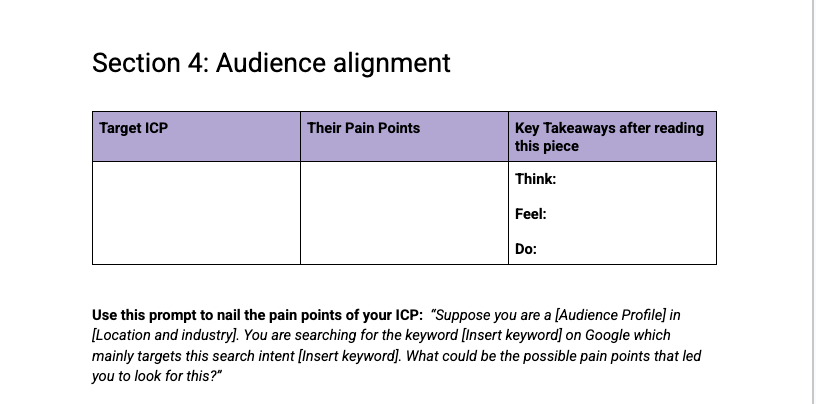
Audience alignment (think, feel, do)
This part gives the writer a clear view of the reader’s mindset. This section spells out:
What the ICP believes
Where they’re stuck
What they need explained
What shift the piece should create
Internal links
Internal links shape how the reader moves across your content. They help the writer:
Connect this piece to related assets
Build continuity in the argument
Reinforce authority by pointing to deeper resources
Primary questions (ICP research)
You list the questions your reader would actually search because they determine the structure of your draft. These questions:
Tell the writer what they must answer
Decide which headers and subheaders matter
Prevent irrelevant tangents
Ensure the draft solves a real problem, not a theoretical one
Resources
This section prevents the writer from relying on random Google searches. You give the writer:
Curated sources
Examples worth referencing
Internal assets that anchor the tone and depth
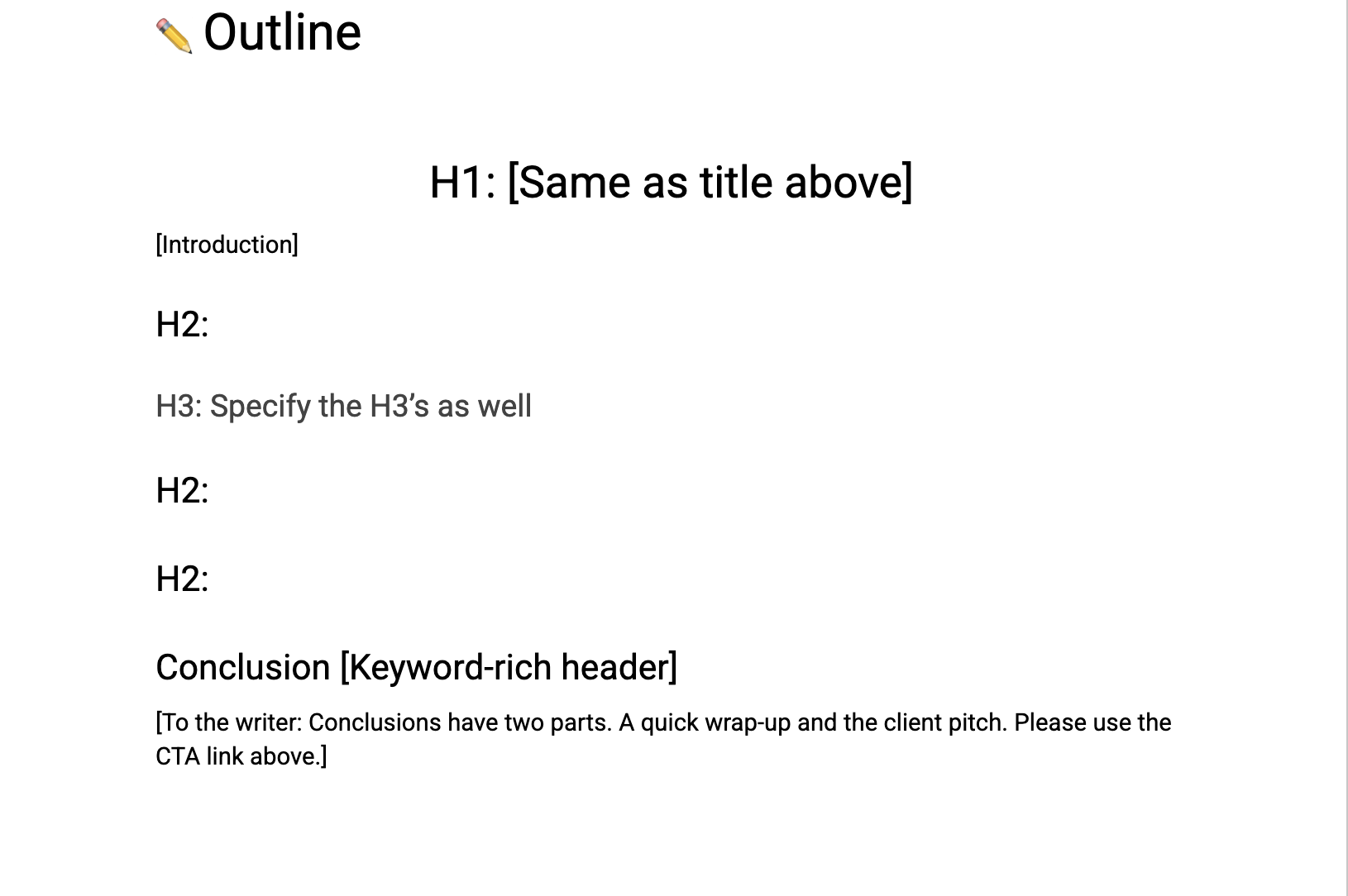
Outline section
You end with a structure so the writer knows exactly how the narrative flows. A strong outline:
Creates clarity from start to finish
Prevents repetition
Aligns the tension → insight → action sequence
Ensures the CTA lands at the right time
How to build an outcome-driven brief (step-by-step)
You build a strong brief by removing uncertainty and giving the writer the exact inputs they need to make precise decisions. Each step sharpens the direction of the piece so the final draft works for the reader and for your commercial goal.
Here’s a step-by-step to help you build an outcome-driven brief:
Step 1: Nail the search intent
You begin with search intent because it frames the reader’s mindset before they land on your page. If you don’t know why they’re searching, you can’t decide how deep to go, what to explain, or what decision you need to help them make.
When intent is clear, the structure becomes obvious:
If someone wants to compare options, you build a comparison.
If they want clarity on a confusing topic, you build an explanation.
If they want to validate a choice, you build a decisive argument.
You cannot choose an angle, outline, or examples until this is fixed.
Step 2: Define the commercial outcome
Once you know what the reader wants, you decide what the business needs. Every piece must support a measurable outcome: reduce objections, improve conversion, bring in qualified search traffic, create internal alignment, or shorten the sales cycle.
This gives the writer a clear definition of success. It also prevents you from turning the piece into a general explainer when the business actually needs something more specific.
Step 3: Shape the angle, not the topic
A topic answers what, and an angle answers how and why. The angle determines:
What belief you reinforce
What misconception you challenge
What problem opens the piece
How you frame the solution
A clean angle prevents generic drafts and lets the writer build a tight, defensible
For example:
❌“Explain the benefits of onsite search.”
✅“Most brands think search is a convenience feature. In reality, it’s a revenue lever, and the difference shows up in conversion, not UX.”
Step 4: Add industry context
A writer can be talented and still miss the nuance you take for granted. They don’t see the patterns you see across accounts. They don’t know which objections repeat every week or which examples feel real for your ICP.
This step removes that gap.
You give them the details that shape decisions in your space:
How buyers behave
What slows deals
What the ICP misjudges
What questions surface during calls
What signals indicate interest or doubt
This context tells the writer how your ICP behaves, not how marketing personas behave. It makes the draft sound like it was written by someone inside the industry.
Step 5: Map the reader questions
Real questions shape structure better than any keyword list. They reveal the reader’s priorities in their own language.
List 5–7 questions your ICP would genuinely type into Google today, given the intent and angle you defined earlier. For example:
“What’s the fastest way to evaluate vendors without talking to five sales reps?”
“What should I look for to avoid integration delays?”
“Why do most recommendations ignore implementation time?”
These questions become the base of your headers. They also decide how much depth each section needs, where examples fit, and what the reader must understand before they trust your guidance.
When you get this right, the draft feels intuitive to the reader because it mirrors the decisions they’re trying to make.
Step 6: Build the narrative spine
The narrative spine of your brief prevents the draft from feeling scattered. It gives the writer a clear sense of direction even before they write the outline. Your spine includes:
The problem the reader already relates to.
“Teams choose software on price and pay for it in onboarding.”
The insight that reframes the problem
“Total implementation cost matters more than the monthly plan.”
The logic that proves the point
Show time delays, hidden costs, and integration patterns
The examples that feel real, not theoretical
2–3 anonymised customer situations
The action the reader should take next
“Use this checklist to estimate true onboarding cost.”
When the foundation is strong, the reader moves from start to finish without friction, and the message lands exactly as you intended.
Step 7: Add research to support the angle
Only now do you add research. Not before. If you add it earlier, the piece starts shaping itself around whatever information you find, instead of the angle you’ve already established.
You include only what strengthens your argument: a data point that proves a claim, a reputable reference the writer can cite, or an example that clarifies the idea. Anything that doesn’t serve the angle or outcome is removed.
This keeps the draft clean, credible, and focused on the shift you want the reader to make.
How to put the full brief together: A checklist
1. Search intent is correct
Have you identified the exact intent behind the keyword?
Does the draft angle match that intent?
Have you checked the top SERP results to validate?
2. Outcome is clear
What business outcome should this asset drive?
Who will use it (marketing, sales, retention, founder)?
What does success look like?
3. Angle (and non-angle) is defined
What is the specific angle this piece will take?
What is not the angle (to prevent drift)?
What misconception are we correcting?
4. ICP alignment is sharp
Who exactly is this piece for?
What are they trying to solve right now?
What blockers or misunderstandings do they have?
What should they think, feel, and do after reading?
5. Writer has industry-level context
Have you added examples, nuance, or patterns the writer wouldn’t know?
Does the brief include the insider context needed to sound credible?
No dependency on SMEs; clarity comes from you, not interviews.
6. Reader questions are mapped
Have you listed 5–7 authentic questions your ICP is asking?
Do these questions shape your H2/H3 structure?
Are you solving real pain, not filler curiosity?
7. SERP gaps are identified
What’s missing in competing articles?
What will this piece add that others don’t?
Are you building differentiation, not duplication?
8. Internal links + CTA are confirmed
Have you mapped internal links that support your narrative?
Is the CTA connected to the commercial outcome?
Does the piece naturally flow toward the CTA?
9. Narrative base is set
Opening problem
Core belief
Supporting proof
Examples and case studies
Closing clarity
CTA
10. Research supports the angle (not the other way around)
Is all research filtered and relevant?
No unfiltered dumps
No unrelated stats
Every reference must push the narrative forward.
Ready to create briefs that lead to stronger drafts?
Most teams over-edit because the brief never did its job. When you build the brief with outcome clarity (not topic lists), the writer finally has the direction they need to produce a draft you can approve without tearing it apart.
A strong brief shows:
What the reader wants at that moment
What shift do you need to create for the business
Which angle supports that shift
What context the writer must carry into the draft
Which questions the piece must answer
Follow this sequence consistently, and your content operation becomes predictable instead of reactive.
Ready to try it with your next asset? Grab the free Saasy Brief Template, make a copy, and use it to create your first outcome-driven brief using the exact structure we rely on internally.